Disclosure: This article may contain affiliate links. We earn a commission at no extra cost to you if you purchase through our links. We only recommend tools we genuinely believe in.
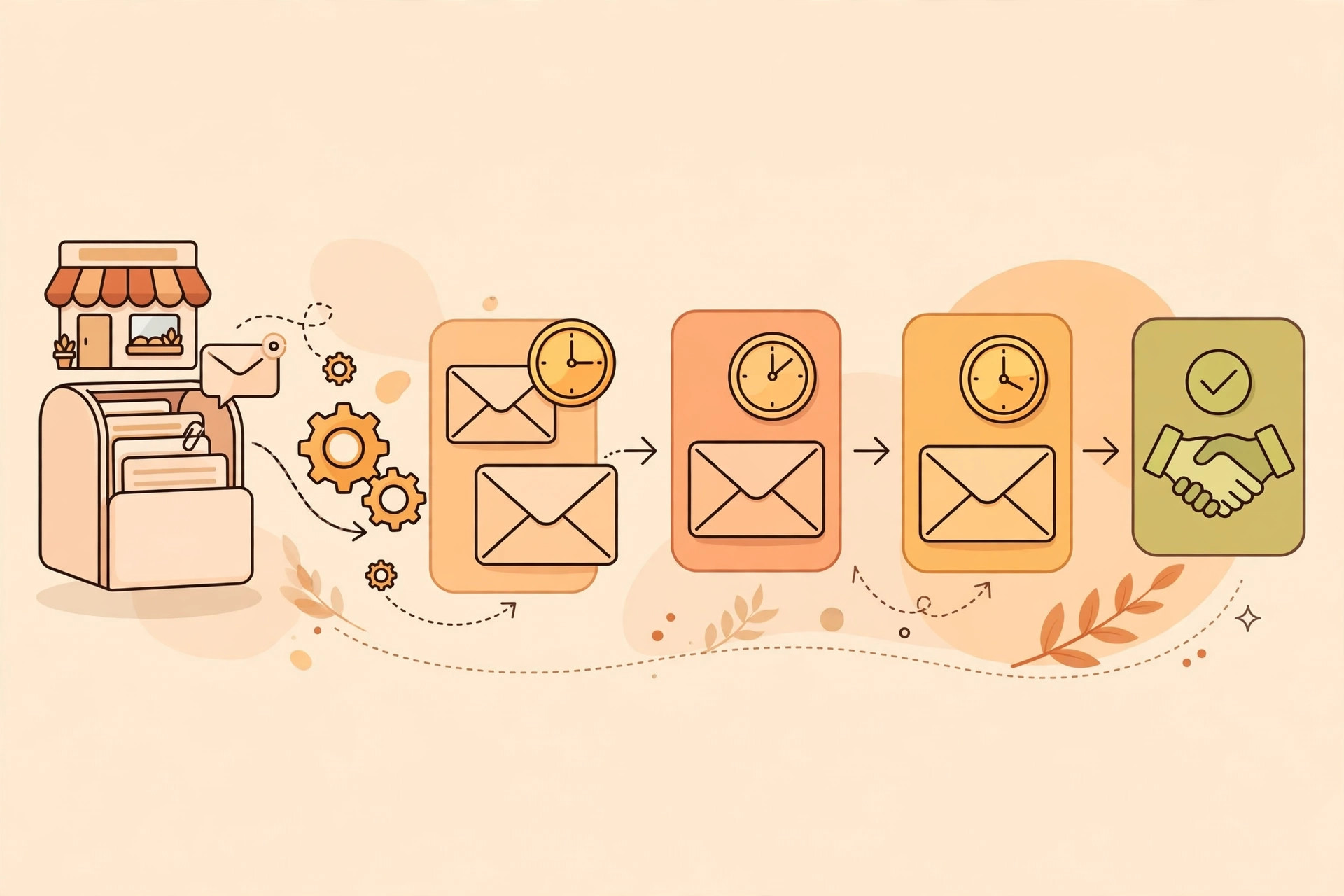
Most lost leads do not say no. They go quiet. They asked for a demo, downloaded a guide, or replied once, and then work, travel, or a budget freeze took over. I used to treat that silence as rejection, so I moved on. Then I looked at where my later conversations actually came from, and a pattern showed up: many of them started with a second or third message, not the first. The first reply wins attention. Follow-up wins the deals that were never lost, only delayed.
This post is the missing step after two earlier playbooks. It starts where How I Automate Demo Qualification Without a Sales Team leaves off, and it pairs with AI Speed-to-Lead in 2026: What's Changed Since March. Speed-to-lead gets the first reply out fast. Qualification decides who gets your calendar. Follow-up is what keeps everyone else warm without turning your inbox into a drip machine.
This is a playbook, not a results report. The timings below are a starting template to tune after your first month, not measured outcomes. Your numbers will differ because your sales cycle, audience, and offer differ.
The Problem: One Reply, Then Silence
Manual follow-up fails for the same reason manual qualification failed: it depends on memory, and memory loses to a busy week. When follow-up lives in your head, three things happen:
- Good leads slip away quietly. Nobody rejects you. The thread just sinks, and by the time you remember it, the moment has passed.
- Follow-up becomes uneven. One prospect gets four messages in a week because you are worried about them. Another gets none because you forgot.
- You follow up from guilt, not from a plan. The message sounds apologetic, vague, or pushy, because you are writing it at the last minute instead of from a sequence you already approved.
Automation fixes this the same way it fixed qualification: by being consistent. Every lead gets the same timed sequence, every reply stops it instantly, and you spend your time on the replies, not on remembering who to chase.
The System in One Pass
The stack is deliberately boring, and it reuses the tools from the qualification post. No new platform is required to start.
| Stage | Tool | What happens |
|---|---|---|
| Capture | HubSpot or your CRM | Every lead, demo request, and reply lands in one record, with the last message date visible |
| Enrich | HubSpot enrichment or Clearbit | Role, company size, and current tool fill in where available, so the message fits the person |
| Sequence | HubSpot sequences, or n8n plus your email tool | Timed follow-up messages go out on schedule, in your voice, from templates you approved |
| Stop rule | The CRM workflow | Any reply, booking, unsubscribe, or bounce stops the sequence immediately, with no extra message |
| Notify | Slack or email, once a day | Replies and bookings land in one daily queue, not as a stream of pings |
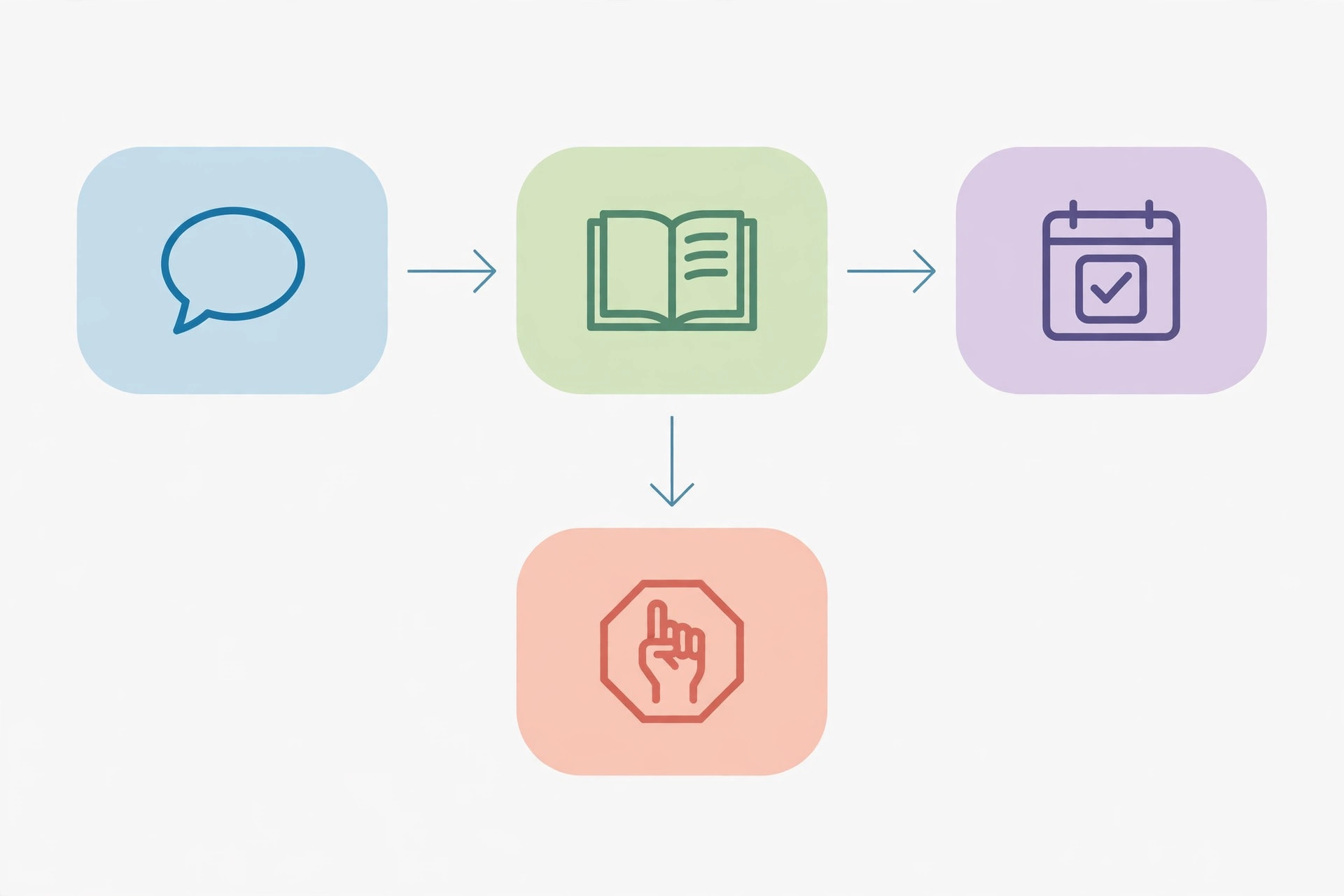
That stop rule is the whole system. A follow-up sequence without a hard stop is spam with better branding. Build the stop rule first, then write the messages.
The Sequence: Five Touches Over 14 Days
This is the starting template I use for a qualified or partly qualified lead who went quiet after the first contact. It is intentionally short. Five useful touches beat ten forgettable ones, and a short sequence is easier to keep honest.
| Touch | Timing | Channel | What it does |
|---|---|---|---|
| 1 | Immediately | The first reply, the answer, or the booking link, depending on the lane | |
| 2 | Day 3 | One short check-in, one useful link, one clear question | |
| 3 | Day 6 | A relevant resource: a teardown, a comparison, or a short guide that answers the question they asked | |
| 4 | Day 10 | A plain-language close: still relevant, yes or no, and an easy way to say not now | |
| 5 | Day 14 | The break-up message: I will stop here, the door stays open, and here is the resource to keep |
Two rules govern the timing. First, never send more than one follow-up in a single day, and never send on a weekend unless your audience clearly works weekends. Second, the sequence pauses, not just stops, for out-of-office replies. A prospect who is away for two weeks is not a cold lead. Resume after they return, with one message, not the whole sequence at once.
What Each Touch Actually Says
The templates below are shapes, not scripts to copy word for word. Write them in your own voice, then approve them once, and let the system send that approved version.
- Touch 2, the check-in: one sentence on why you are writing, one link to something useful, and one question that is easy to answer. Example shape: checking in on your question about X, here is the short guide that answers it, does Y still matter this month?
- Touch 3, the resource: no pitch, just value that fits their original problem. If they asked about creative testing, send the testing workflow, not your pricing page. Relevance is what earns the reply.
- Touch 4, the honest close: say plainly that you do not want to keep emailing if the timing is wrong. Offer the downgrade: a pause, a later date, or a shorter next step. An easy no is better than a silent maybe, because a no closes the loop and a maybe just costs more follow-up.
- Touch 5, the break-up: thank them, stop the sequence, and leave one resource behind. This message gets replies precisely because it removes pressure. It also protects your sender reputation, because you are not the person who emails forever.
Rule: every follow-up must be useful without a reply. If the message only makes sense when they buy, it is not a follow-up. It is a pitch wearing a follow-up costume.
The Stop Rules, Written Down
Write these into the workflow itself, so a new tool or a new team member cannot quietly remove them:
- A reply stops everything. No confirmation message, no next touch, no handoff email that restarts the clock. The human takes over from the reply.
- A booking stops everything. The calendar invite replaces the sequence. Sending a follow-up after someone booked is how trust evaporates.
- An unsubscribe or bounce stops everything, permanently. Do not move that person to another list or another sequence. The stop is the system working.
- A no is a stop, not a new sequence. Thank them, record the reason if they gave one, and set a manual revisit date only if they invited one. Do not auto-enroll a no into a nurture list the same week.
- A referral or a wrong-person reply is a reroute, not a stop. Thank the person, ask for the right contact only if they offered to help, and start fresh with the new person. Never forward the old sequence to someone new.
What Breaks, and the Guardrail for Each
| Failure | Warning sign | Guardrail |
|---|---|---|
| Sequence keeps sending after a reply | A prospect replies twice, annoyed, to the same thread | Test the stop rule with a test lead before launch, and test it again after any CRM change |
| Messages sound robotic at scale | Replies drop, unsubscribes rise, tone complaints appear | One human read of every template before launch, and one template rewrite per quarter |
| Wrong person or wrong company gets the sequence | Replies saying this is not for me, or bounces cluster | Enrichment check plus a Review lane for unclear records, borrowed from the qualification post |
| Timing piles up on one day | Two touches land the same morning | One touch per day cap, enforced in the workflow, not by memory |
| Sender reputation falls | Deliverability warnings, or replies landing in spam | Short sequence, real unsubscribe handling, and no purchased lists, ever |
| Follow-up becomes the only system | Leads get messages but no human ever reads the replies | Daily reply queue, cleared once a day, by a named person |
The Weekly Upkeep: About 20 Minutes
Budget about 20 minutes a week, as a planning figure, not a measured average:
- Clear the reply queue. Every reply gets a human answer or a booked next step before the week ends.
- Read three follow-up threads at random. Do the messages still sound like you? Does the resource link still work?
- Check the stop rule once. Send a test reply to a test lead and confirm the sequence stops. Automation that silently fails is worse than no automation, because you stop checking.
- Prune one thing. A stale template, a dead link, a touch that never earns a reply. A shorter sequence that people answer beats a longer one they ignore.
Lessons at the End
- Silence is usually delay, not rejection. Follow up on that assumption, and design for it.
- The stop rule is the product. A sequence without a hard stop is not automation. It is persistence without consent.
- Five useful touches beat ten forgettable ones. Short sequences are easier to write well, easier to test, and easier to keep honest.
- Every touch must stand alone. If a message is only useful when they buy, rewrite it until it is useful on its own.
- An easy no is a good outcome. It closes the loop, protects your reputation, and frees the lead for a genuine later return.
- Replies are the job. The sequence buys you time. Spend that time answering the people who reply, not building a longer sequence.
If you build only one thing from this post, build the stop rule and the five-touch template, and run it for a month. Then read the replies, not just the open counts. The replies will tell you which touch earned its place, which one to rewrite, and which lead was never lost at all, only waiting for a second message.