Disclosure: This article may contain affiliate links. We earn a commission at no extra cost to you if you purchase through our links. We only recommend tools we genuinely believe in.
A proposal used to cost me a full evening. I would open a blank document after the sales call, re-read my notes three times, and try to remember exactly what the prospect had said they cared about. By 11 p.m. I had something long, careful, and late. The prospect had already moved on to the next agency, the one that sent their proposal the same afternoon.
This post is the system that replaced that evening. It is a playbook, not a results report. It sits between two earlier posts in the same client lifecycle: How I Automate Demo Qualification Without a Sales Team decides who gets a call, and How I Onboard a New Client With AI, Without Losing the Personal Touch starts the work after the yes. The proposal is the bridge between them, and it is where most small agencies lose deals they already won on the call.
The Problem: Proposals Written for the Writer, Not the Buyer
Most proposals fail in the same way, and it is not because the price is wrong. They are written to prove the agency did its homework, not to help the buyer say yes. So they open with the agency story, list every service, bury the price on page six, and end with a vague next step like "let us know what you think."
Three problems hide inside that shape:
- The decision is invisible. The buyer finishes the proposal and still does not know what they are buying, what it costs, or what happens if they sign.
- The value arrives after the price. A buyer who has to read six pages to find the one outcome they care about has already decided this will be hard work.
- There is no single next step. "Let us know" is not a step. It is a polite way of ending the conversation and hoping the buyer restarts it.
AI makes this worse if you let it. Left alone, it will happily turn your call notes into a longer, smoother version of the same bloated document. Used properly, it does the opposite: it drafts from your notes only, in a fixed structure, and leaves the judgment, the price, and the promise to you.
The System in One Pass
The stack is deliberately boring, and it reuses the tools from the qualification and onboarding posts. No new platform is required to start.
| Stage | Tool | What happens |
|---|---|---|
| Capture | Your call notes, plus your CRM | The prospect's words, their goal, their budget range, and their deadline land in one place during the call |
| Draft | Claude or ChatGPT, with a fixed template | A first draft in the five-section format below, from your notes only |
| Check | You, with the call notes open | Every claim verified, every number checked, every vague sentence rewritten or cut |
| Price | You, and only you | The price and the scope are set by a human, never generated, never guessed by the model |
| Send | Email, with a calendar link | One proposal, one price, one clear next step, sent within one business day of the call |
Notice what automation does not do in this table: it does not decide the price, it does not promise an outcome, and it does not send the proposal on its own. It drafts. You judge. That split is the whole system.
The Five Sections, in This Order
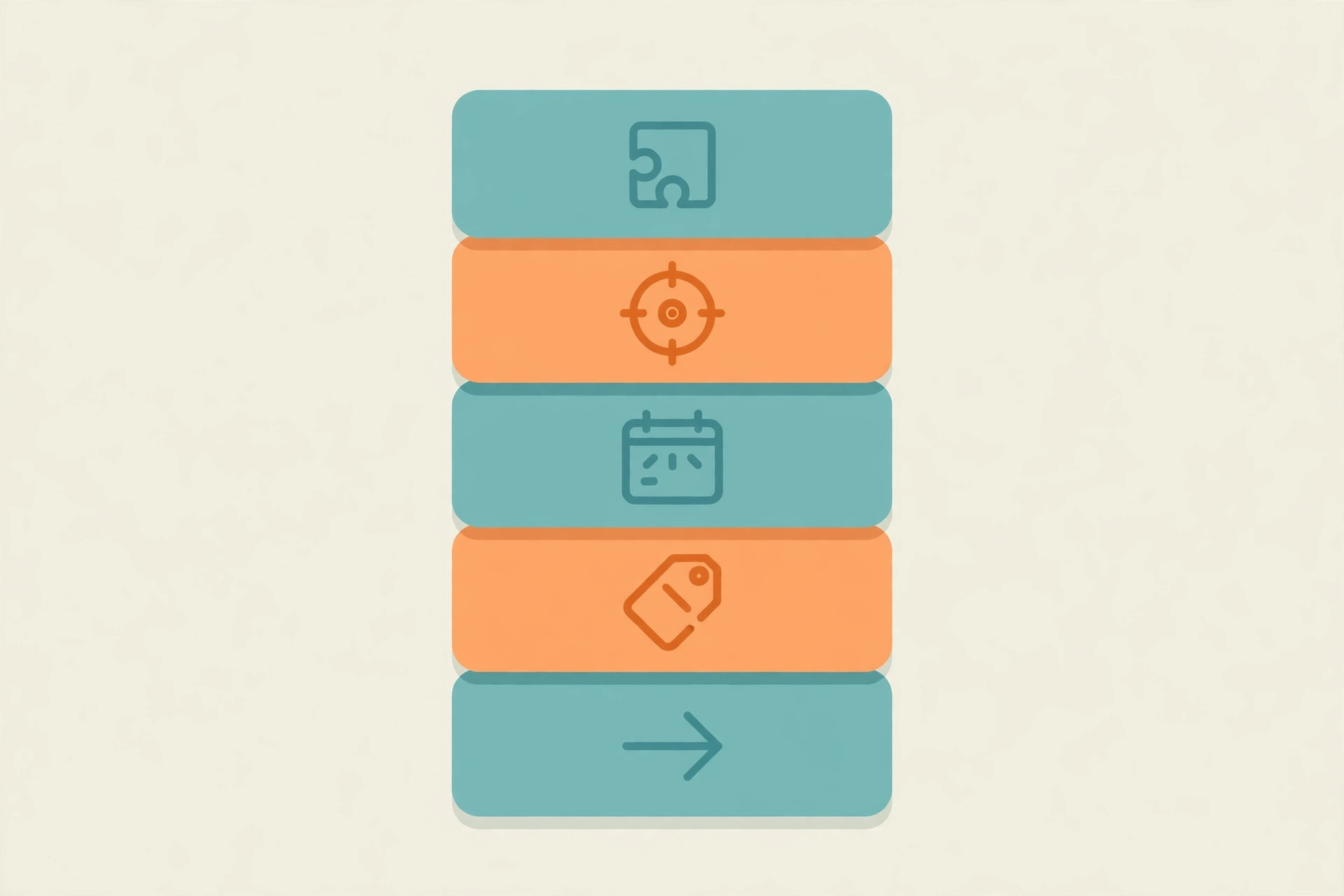
Every proposal uses the same five sections, in the same order, every time. Consistency is a feature here. A buyer who has read one of your proposals can read the next one in five minutes, and a buyer who can read it in five minutes can decide on it the same day.
- The problem, in their words. One paragraph, using the prospect's own language from the call. If they said "our leads go cold in a day," write that, not "suboptimal lead velocity." This section proves you listened.
- The outcome, in one line. What changes for them, and by when, as a planning target, not a guaranteed result. One sentence, one date, no adjectives.
- The scope, as a short list. Exactly what is included, and exactly what is not. The "not included" line is as important as the included list, because it is where scope creep starts.
- The price, on the same page as the outcome. One number, or one clear option table if you offer two tiers. Never make a buyer hunt for the price.
- The next step, with a date. One action, one owner, one date. For example: "Sign by Friday, kickoff call Monday at 10 a.m., calendar link inside."
The order matters. Problem first, because that is what the buyer cares about. Price next to the outcome, because price only makes sense beside what it buys. Next step last, because by then they understand what saying yes actually starts.
What a Strong Line Looks Like
The difference between a proposal that closes and one that stalls is usually a handful of sentences. This comparison is the filter I run before sending:
| Weak line | Strong line, and why it works |
|---|---|
| "We offer a full suite of marketing services." | "We run your Meta ads and your follow-up, so no lead goes cold." Names the work, names the outcome. |
| "Our team has deep experience in your sector." | "We onboarded a client in your niche last month, and week one looked like this." Specific, checkable, recent. |
| "Pricing depends on scope and will be discussed." | "One price: $3,500 a month, scope listed above, no setup fee." A number the buyer can decide on. |
| "Let us know what you think." | "Reply yes by Friday and the kickoff call is Monday at 10 a.m." One action, one date. |
| "We will keep you updated throughout." | "You get a weekly report every Friday at 4 p.m., five sections, same format." A promise with a time attached. |
If a sentence could appear in any agency's proposal, cut it or rewrite it until it could only be about this client.
The Drafting Workflow, Step by Step
Here is the workflow I use, with the human checkpoints marked clearly. Budget about 45 minutes per proposal, as a planning figure, not a measured average, once the template is set: about 10 minutes to capture and draft, about 25 minutes to check, price, and rewrite, and about 10 minutes to send and file.
- Step 1: Capture during the call, not after it. Write down the prospect's goal in their words, the deadline they named, the budget range they hinted at, and the one thing they said they were worried about. A proposal drafted from memory invents details, and invented details are what kill trust later.
- Step 2: Draft from your notes only, never from general knowledge. The prompt is simple: turn these notes into the five-section template, in plain language, with no new claims, no invented numbers, and a flag wherever a number or a fact is missing. If the model cannot find something in your notes, it must say so, not fill the gap.
- Step 3: Set the price yourself, before you read the draft. Price is a business decision, not a writing task. Decide the number, the scope it covers, and the payment terms first. Then check that the draft's scope matches the price, line by line.
- Step 4: Rewrite the outcome line in your own words. The draft's outcome sentence is a starting point, not your promise. Read it, and ask: would I say this to the prospect on a call? If not, rewrite it until you would, and make sure the scope can actually deliver it.
- Step 5: Cut one section before you send. A proposal gets better when you remove a paragraph, a service list, or a credential nobody asked about. If the prospect never mentioned it on the call, it does not belong in the proposal.
- Step 6: Send within one business day, with a calendar link. Same-day is better, next morning is acceptable, next week is a different conversation. Attach the kickoff call link inside the proposal, so saying yes is one click, not a new round of scheduling.
What Breaks, and the Guardrail for Each
| Failure | Warning sign | Guardrail |
|---|---|---|
| Proposal reads like a brochure | Buyer asks questions the proposal answered | Cut to the five sections, and open with their words, not your story |
| AI invents a claim or a number | A sentence sounds right but is not in your notes | Draft from notes only, and check every claim against the call notes before sending |
| Price arrives without context | Buyer replies "let me think about it" and disappears | Put the price beside the outcome, with the scope listed above it |
| Proposal goes out late | The call was Monday, the proposal is still a draft on Thursday | Shrink the proposal, do not move it. A short proposal on time beats a long proposal late |
| Scope is vague, then grows | Client asks for work that was never priced | Name what is not included, in writing, in the scope section |
| No follow-up after sending | Silence for a week, then a lost deal | One short check-in, two business days after sending, with the next-step date repeated |
Rule: draft with AI, price as a human, send on time. If a sentence would sound wrong coming from you on a call, do not let a system send it in a proposal.
Lessons at the End
- A proposal is a decision document, not a brochure. If the buyer finishes it without knowing the outcome, the price, and the next step, it failed, however polished it was.
- Five sections, same order, every time. Consistency is what makes a short proposal readable. Buyers learn where to look, and then they actually look.
- AI drafts, you price. The model can structure your notes and shorten your noise. It cannot decide what your work is worth, and it must never invent a claim about the client.
- Their words beat your adjectives. A proposal that quotes the buyer's problem back to them proves you listened. A proposal that describes your agency proves you can write about yourself.
- One number, beside one outcome. Price only makes sense next to what it buys. Hide either one and the buyer stalls.
- Same day beats perfect. A short proposal sent the same afternoon keeps the energy of the call. A long proposal sent next week restarts the sale from zero.
If you build only one thing from this post, build the five-section template and the one-day rule: problem in their words, outcome in one line, scope with what is not included, price beside the outcome, and one next step with a date, sent within one business day, with every claim checked against your call notes before it goes out. That template, run the same way every time, is what turns a good sales call into a signed client.