
Disclosure: This article may contain affiliate links. We earn a commission at no extra cost to you if you purchase through our links. We only recommend tools we genuinely believe in.
A client once cancelled with a polite email on a Tuesday morning. Short, kind, no complaints. "We are going to pause for now." I read it twice, looking for the problem, and there was none in the email, because the email was not where the problem happened. The problem happened over the previous six weeks: replies got shorter, the weekly report went unanswered, the call moved twice, and the person who hired me stopped showing up to meetings. Every signal was visible. I had no system for noticing any of them.
This post is the system I built after that Tuesday. It continues the client series from the last two weeks: How I Automate Lead Follow-Up So No Good Lead Goes Cold keeps new leads warm, How I Onboard a New Client With AI, Without Losing the Personal Touch sets up the first week, and How I Write a Weekly Client Report Clients Actually Read keeps the relationship honest. This one watches the health of the relationship after it is running, and tells you when to act, while there is still something to save.
This is a playbook, not a results report. The timings below are a starting template to tune after your first few months, not measured outcomes. Your signals and thresholds will differ because your clients, your services, and your tools differ.
The Problem: Churn Is a Slow Fade, Not a Sudden Decision
Most cancellations feel sudden to the person receiving them, and they almost never are. A client decides to leave over weeks, in small steps, and the cancellation email is only the step you finally see. Before it, the client stops replying quickly, stops opening the report, stops bringing problems to you, and starts shopping quietly. None of those steps is dramatic on its own. Together, they are the whole story.
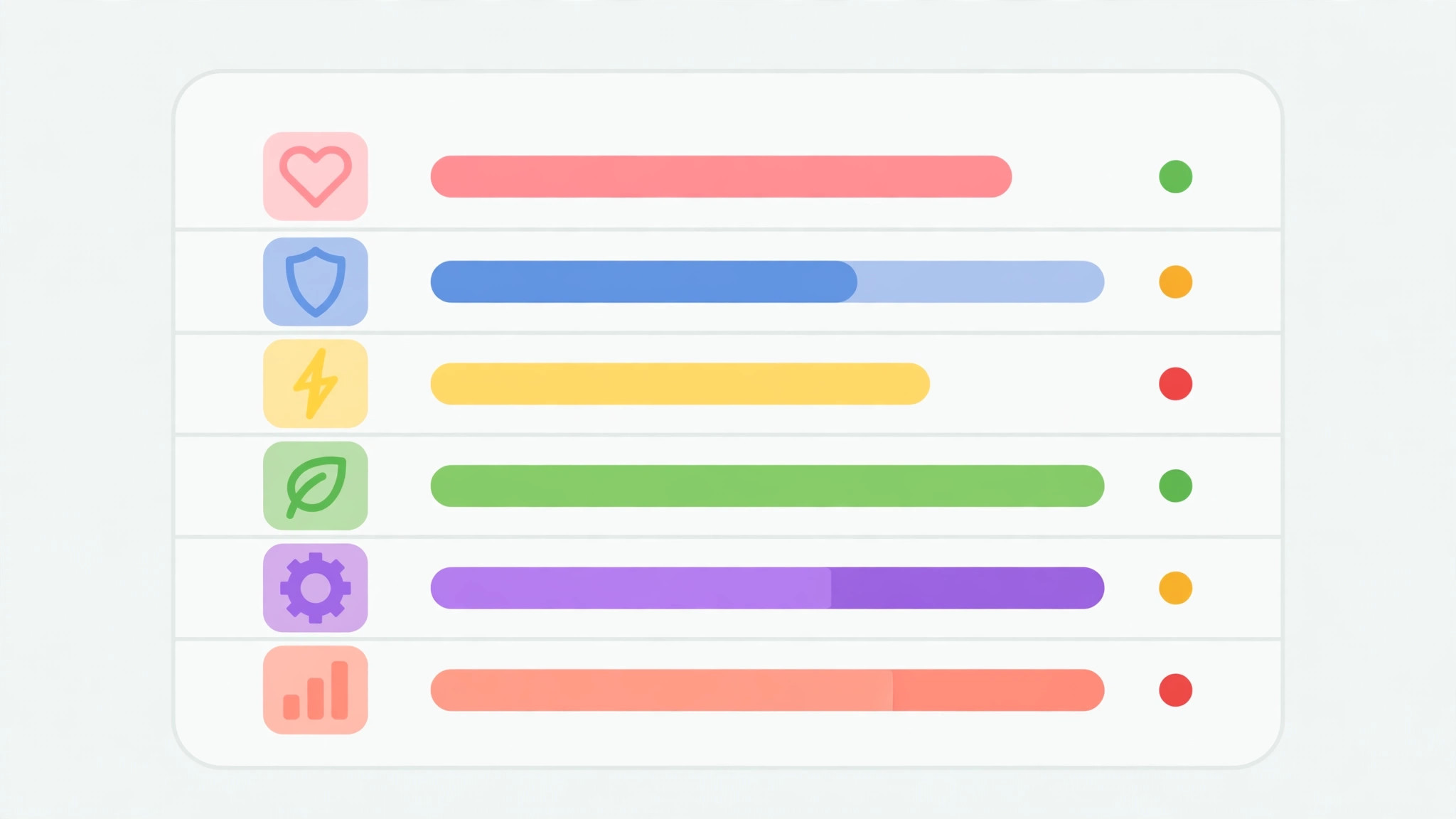
Six signals cover almost every slow fade I have seen. Each one is ordinary by itself. Two or three together, for the same client, in the same month, is the pattern worth acting on.
| Signal | What it looks like | Why it matters |
|---|---|---|
| Replies get shorter and slower | One-line answers, or a two-day gap where there used to be same-day replies | Engagement is the earliest thing to drop, before results do |
| The report stops getting opened or answered | No reply for two or three weeks, no questions, no clicks | The client has stopped looking at the work, which means they have stopped believing it matters |
| Meetings move, shrink, or lose the decision maker | The call is rescheduled twice, cut to 15 minutes, or the person who hired you stops attending | Your access to the relationship is narrowing, and a narrower relationship is easier to end |
| The invoice gets questioned, or payment slows | "Can you break this down?" or a payment that used to land on time now takes a reminder | Money questions are often a value question wearing a finance costume |
| Usage of the deliverable drops | Logins fall, the dashboard goes quiet, the asset you built is opened less | A deliverable nobody uses is a renewal nobody defends |
| Your champion goes quiet or leaves | Your main contact stops replying, changes role, or leaves the company | The person who would argue for keeping you is gone, or has already checked out |
No single signal means a client is leaving. A client can be busy, on holiday, or in a budget review. The score only matters as a pattern, which is why the workflow below scores all six together, every week, instead of reacting to one bad week.
The System in One Pass
The stack is deliberately boring, and it reuses the tools from the onboarding and follow-up posts. No new platform is required to start, and no prediction model is involved. This is a checklist with a score, not machine learning.
| Stage | Tool | What happens |
|---|---|---|
| Collect | Your CRM, plus your inbox and calendar | Replies, report opens, meeting changes, and payments, all in places you already use |
| Score | A spreadsheet or a Notion table, one row per client | Six signals, scored 0 to 2 each, every Friday, from evidence, not from memory |
| Summarize | Claude or ChatGPT, with a fixed prompt | A short watch list for the week: which clients moved bands, and which single signal changed |
| Alert | Slack or email, Friday morning | The watch list lands in one place, so the check does not depend on remembering to open the sheet |
| Act | You, on a call or in a personal message | The score decides the band, and the band decides the move, before Monday |
Notice what automation does not do in this table: it does not decide whether a client is unhappy, it does not write the save message, and it does not talk to the client. It collects the evidence and does the arithmetic. You read the score and make the call.
The Weekly Score: Six Signals, Twelve Points
Every Friday, score each active client on each signal: 0 means healthy, 1 means watch, 2 means warning. Score from evidence you can point to, an inbox thread, a calendar change, a CRM note, not from how you feel about the client this week. Add the six numbers for a total out of 12, and read the band.
| Score | Band | What it means | What you do |
|---|---|---|---|
| 0 to 2 | Green | Healthy | Nothing extra, normal cadence |
| 3 to 5 | Amber | Watch | One personal check-in, within two business days |
| 6 to 8 | Red | At risk | Save playbook, this week, on a call |
| 9 to 12 | Critical | Act today | Same-day call, not an email |
Three rules keep the score honest:
- Score every active client, every week, even the happy ones. A client you skip is a client whose fade you will miss, and the happy ones are the ones whose signals surprise you most.
- One person owns the score. If scoring is everyone's job, it is nobody's job, and the sheet quietly stops updating in week three.
- A move of two points matters more than the total. A client who jumps from 1 to 4 in one week is telling you something, even though the band still says amber. Read the change, not just the number.
Budget about 20 minutes for the scoring once the sheet exists, as a planning figure, not a measured average. The first week takes longer, because you are setting up the rows and deciding what counts as a 1 versus a 2 for each signal. Write those definitions down next to the sheet, so next Friday's scores mean the same thing as this Friday's.
The Save Playbook: What Each Band Gets You to Do
The score is only useful if each band has a move attached to it, decided in advance, so you act instead of debating. The moves below are the whole playbook.
- Green: nothing extra. Send the normal report, keep the normal cadence. The temptation with a green client is to do something clever to make them greener. Do not. Consistency is the reward for a healthy account.
- Amber: one personal check-in. A short message, written by you, about something specific: the last deliverable, the next milestone, or a question only that client can answer. Ask one question: what would make this month better than last? Then listen to the answer, and write it down, because the answer is your save plan if the score keeps rising.
- Red: a call, not an email. Bring one concrete win from the last two weeks and one honest question about what is not working. Re-agree the next 30-day outcome in plain language, and write it down where both of you can see it. If the client will not take the call, that is itself a signal: score it, and move the client to critical.
- Critical: same-day call, and name what you noticed. Say plainly what changed: the replies slowed, the meetings moved, the report went unanswered. Do not apologize for noticing, and do not open with a discount. Offer a pause, a smaller scope, or a reset of the goal, and let the client pick. A discount offered first tells the client the price was the problem, when the problem is usually that they stopped believing the work mattered.
Two things the save playbook never does. It never automates the save message, because a client who feels processed will not stay, however smooth the system is. And it never argues the client out of leaving. If the honest answer is that the fit is gone, let them go well: a clean ending, a handover, and a door left open beats a retained client who resents the retainer.
What Breaks, and the Guardrail for Each
| Failure | Warning sign | Guardrail |
|---|---|---|
| The score becomes a ritual | Every client is green every week, and nobody believes it | Recalibrate with one real signal per client each month, and let one amber appear |
| You score from memory | Scores drift toward how you feel about the client | Score from the inbox, calendar, and CRM, with the evidence linked in the row |
| An amber client gets an automated message | It reads like a system wrote it, because one did | Amber gets a personal message, written by you, about something specific |
| You wait for red before acting | By red, the decision is half made | Amber is the action band. Red is the rescue band |
| A saved client slides back | The same signals return a month after the save | Keep a saved client on the watch list for 30 days after the save call |
| The champion leaves and nobody notices | The account goes quiet after a handover | Track the champion as a signal, and re-introduce yourself to the new contact within a week |
Rule: score from evidence, act while it is amber. A client who hears from you while things are still fine believes you noticed. A client who hears from you after the cancellation email believes you panicked.
Lessons at the End
- Churn is a fade, not an event. The cancellation email is the last step. The signals arrive weeks earlier, and they are all visible.
- Six signals, one score, once a week. Simple beats clever. A spreadsheet you actually open every Friday beats a prediction model you never check.
- Amber is the action band. Red is the rescue band. If you only act at red, you are negotiating with a decision that is already half made.
- Score from evidence, never from a feeling. Inbox, calendar, CRM. A score you cannot point to is a mood, and moods do not save accounts.
- A save is a conversation, not a discount. A call, one concrete win, one honest question, and a re-agreed 30-day outcome.
- Keep saved clients on the watch list. A save that lasts a week is not a save. Watch for 30 days, and score the change, not just the total.
If you build only one thing from this post, build the Friday score: six signals, 0 to 2 each, every active client, every week. It takes about 20 minutes once the sheet exists, as a planning figure. The score does not save clients. The call you make because of it does.