
Disclosure: This article may contain affiliate links. We earn a commission at no extra cost to you if you purchase through our links. We only recommend tools we genuinely believe in.
The retainer was ending in three weeks. The work had gone well, the client was happy, and I still had not raised the renewal. Not because I forgot. Because every time I opened the email to write it, the draft sounded like a sales pitch, and I did not want the last month of good work to end with me asking for something.
So I did what most people do. I waited. The contract lapsed, the client went quiet for a week, and by the time we talked again they had already started shopping around, not because they were unhappy, but because silence from my side looked like I did not care whether they stayed.
That is the gap this post closes. A renewal is not a sales conversation. It is a planning conversation, and it should start 90 days before the contract ends, not 30. If the first time a client hears the word renewal is when the invoice is due, you have already made it awkward.
This post follows How I Handle a Client Who Goes Quiet With AI (Without Chasing Them), because a lapsed retainer is usually a quiet client with a contract attached, and it pairs with How I Ask Happy Clients for Referrals With AI, because a client who just renewed is the easiest client to ask for an introduction. It also borrows the pricing discipline from How I Price a Project With AI (Without Undercharging), because a renewal is the one moment where your rate should move, and most people freeze it instead.
This is a playbook, not a results report. The timings below are a starting template to tune after your first few renewals, not measured outcomes. Your clients and your contract lengths will differ, so treat the numbers as a draft you calibrate, not a promise.
The Problem: Renewals Fail 90 Days Before the End Date
A renewal feels like a single event, one call, one email, one yes or no. In practice it is a slow build, and by the time the contract is nearly over, the decision is mostly made. Three habits kill it early.
- You only show up when you need something. If the client hears from you mostly when a deliverable is due or an invoice is sent, the renewal email lands as another ask in a one-way relationship.
- The results are never summarized. The client remembers the last two weeks, not the last six months. Without a recap, they judge the retainer by the most recent deliverable, which is the weakest possible sample.
- The next term is a copy of the last one. Same scope, same price, same shape. That tells the client nothing changed, so there is nothing to decide, and nothing to decide usually becomes nothing to sign.
The fix is a runway: three checkpoints spread across the last 90 days, each one short, each one with a clear purpose, and none of them asking for a signature until the last one.
The 90 Day Renewal Runway
The runway has three checkpoints. Each one is a small job, not a big production, and each one builds the case for the next.
| Checkpoint | When | What happens | Who sends it |
|---|---|---|---|
| Value check | 90 days before end | AI drafts a results recap from the client file, you check it, and you send it as a plain update, no ask attached | You, by email |
| Scope preview | 45 days before end | AI drafts a short next-term sketch, two or three options, with what changes and what stays the same | You, on the regular call |
| The ask | 30 days before end | One short proposal email, one term, one price, one start date, with a clear yes | You, by email, then a call if needed |
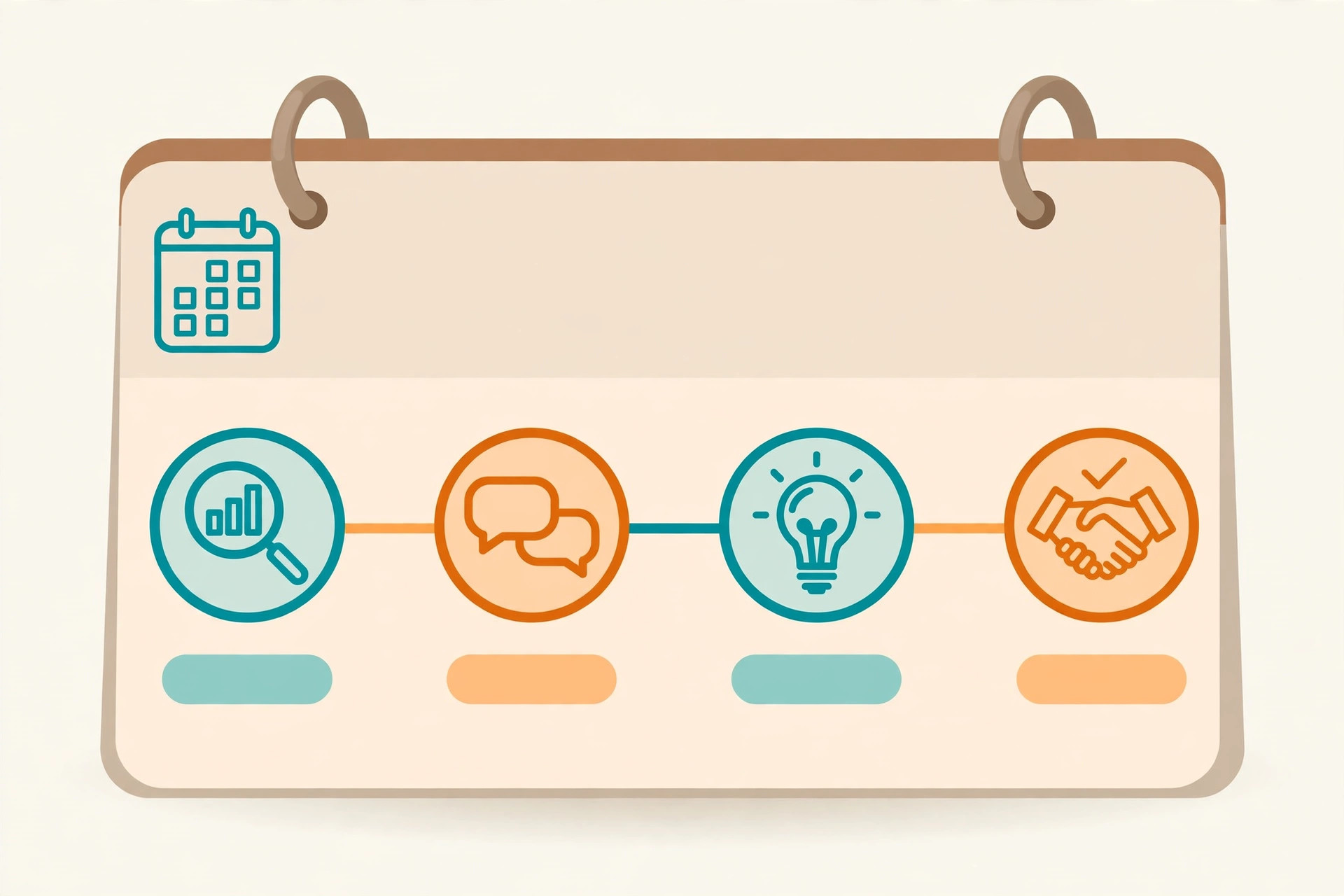
The spacing matters more than the content. A client who sees a recap at 90 days, a preview at 45, and a proposal at 30 has had three chances to raise a concern while there is still time to fix it. A client who gets one email at 14 days has one chance, and it is already late.
The System in One Pass
The stack is deliberately boring, and it reuses the tools from the churn, win-back, and quiet-client posts. No new platform is required to start, and no part of this system contacts a client on its own.
| Stage | Tool | What happens |
|---|---|---|
| Gather the record | The client file, deliverables, and invoices | Everything from the current term in one place, so the recap writes itself from facts |
| Draft the recap | Claude or ChatGPT, with the client file attached | A one-page summary: what was delivered, what changed, what is still open |
| Draft the options | Claude or ChatGPT, from the recap | Two or three next-term shapes, with scope and price for each |
| Send | Email and the regular call | Recap by email at 90 days, options on the call at 45, proposal by email at 30 |
| Track | The client file | Every checkpoint, every reply, and the signed date, logged next to the contract |
Step 1: Build the Results Recap at 90 Days
Open the client file and pull the facts: deliverables shipped, dates, what changed in their numbers, what is still open. Feed that to Claude or ChatGPT and ask for a one-page recap in plain language, grouped by outcome, not by task list. A task list says you were busy. An outcome list says you were useful.
Check every line before it goes out. AI will smooth over weak spots if you let it, and a recap that overstates the work is worse than no recap at all. Cut anything you cannot point to. The recap that survives that cut is the one worth sending.
Send it as an update, not a pitch. Subject line, a quick look back at this term. Body, the recap. Close, one line: happy to walk through it on our next call. No mention of renewal. The client reads it as good service, and that is exactly what it is. The renewal case is being built in the background, in their head, without you asking for anything.
Step 2: Sketch the Next Term at 45 Days
On the regular call, bring two or three options for the next term. Not a menu of ten, and not a single take-it-or-leave-it. Two or three, each one clearly different.
- Same scope, adjusted price. For a client who is happy and wants continuity, with a rate that reflects what the work costs now, not what it cost when the contract started.
- Expanded scope. For a client with new needs, one new area added, one old area dropped, so the term feels like progress, not a repeat.
- Lighter scope. For a client whose budget tightened, a smaller term that keeps the relationship alive instead of losing it entirely.
Draft each option with AI from the recap, then rewrite the prices yourself. Pricing is the one line you never let a model set. Ask which shape fits best, and listen. The answer tells you what the renewal will actually look like, and it tells you a month before you need the signature.
Step 3: Send One Proposal at 30 Days
One email, one term, one price, one start date. The proposal is the option the client leaned toward on the call, written up cleanly, with the scope, the price, the start date, and the one thing they need to do to confirm.
Short wins here. A three-page proposal for a retainer that already exists is a delay machine. If the client needs to forward it to a finance contact, the summary at the top should be enough on its own: term, price, start date, what changes from the last term.
Close with a date, not a question. I will hold this start date through Friday, let me know if anything needs to change. A proposal with no date gets read later, and later usually means never.
Step 4: Handle the Stall
Some clients will not reply to the proposal. That is normal, and it is not a no. Give it five business days, then send one short follow-up with a single question: is there anything blocking this on your side? If the answer is a budget freeze or a new decision maker, you have a real problem to solve, and the lighter scope option from step 2 is already written. If there is still no reply after a second short nudge, close the loop cleanly with a note that the term ends on the contract date and you would be glad to pick it back up when the timing is right. That note is the same discipline as the quiet-client sequence: a clean close beats a slow fade, and it leaves the door open for the win-back later.
The Kill Rules
- Never let AI send a renewal message. Every draft gets read by you first. A wrong price or an overstated result in a renewal email is the fastest way to lose a client you were about to keep.
- Never renew at the old price by default. If the scope is the same and your costs moved, the price moves too, and you say so plainly in the proposal. Freezing the rate out of awkwardness is a pay cut you gave yourself.
- Never skip the recap. If you have no results to summarize, that is the real signal. Fix the work first, then renew, not the other way around.
- Never chase past two nudges. After the second follow-up, close the loop. A third nudge turns a professional relationship into a plea.
What I Would Do Differently
The first time I ran this, I sent the recap at 60 days instead of 90, and the client needed a budget approval that took six weeks. The proposal expired before the approval came through, and we lost a month to paperwork that a 90 day start would have absorbed. The runway is 90 days because real organizations move slowly, not because the work needs it.
The second mistake was offering the options by email instead of on a call. Email options get compared like a price list. Call options get discussed like a plan. The call is the step that does the work.
Lessons
- A renewal is a planning conversation that starts 90 days out, not a sales conversation that starts when the invoice is due.
- The results recap is the renewal case. If you cannot summarize the value, the client cannot see it either.
- Two or three next-term options beat one take-it-or-leave-it, and beat a menu of ten.
- Price is set by you, never by the model, and it moves when your costs move.
- One proposal, one price, one start date, one clear close. Everything else is delay.