
Disclosure: This article may contain affiliate links. We earn a commission at no extra cost to you if you purchase through our links. We only recommend tools we genuinely believe in.
Scope creep never arrives as a big request. It arrives as a small one, in a friendly message, on a Tuesday afternoon: "while you are in there, could you also just add this one page?" Then another one, the next week, and a third the week after that. None of them feels like a fight. Each one takes twenty minutes. And then, three months later, you look at the account and realize you are doing half again as much work as the retainer pays for, and the client has no idea, because you never told them. That is the whole problem. Scope creep is not a client being unreasonable. It is a scope that was never written down, never measured, and never defended, one small yes at a time.
This post is the sequel to How I Run a Monthly Retainer Review With AI (and Keep Clients Renewing). The monthly review is where scope changes surface safely, as a proposal with a price. This is the system that runs between reviews: how I catch a scope request the day it arrives, sort it in minutes, and answer it the same day, with a price, a trade, or a clean yes. It also builds on How I Write a Weekly Client Report Clients Actually Read, because the weekly report is where the extra work becomes visible before the invoice does.
This is a playbook, not a results report. The timings below are a starting template to tune after your first few months, not measured outcomes. Your numbers will differ because your retainers, your clients, and your delivery differ.
The Problem: Creep Is Gradual, and Gradual Is Invisible
A retainer that grows 30 percent in three months does not feel like growth. It feels like being busy. The work expands in the exact places nobody is watching: one extra landing page, a report that quietly doubled in length, a channel that was supposed to be a test and is now a weekly obligation. Each addition is reasonable on its own, and that is why it is dangerous. Nobody approves a 30 percent increase. Everybody approves a twenty-minute favor.
Three things go wrong when the creep goes unmeasured:
- The margin disappears first. You notice the hours before you notice the money, and by the time the money is obvious, the retainer is already underwater.
- The client never sees the generosity. Work you give away silently is work the client assumes was included. Free work that is never named earns no goodwill, because nobody knows it happened.
- Resentment builds on your side. You start dreading the account, and the client can feel it, even though the client did nothing wrong. The relationship rots from your side of the table.
The fix is not to say no more often. The fix is to measure the scope, sort every new request the day it arrives, and answer in writing, with a price or a trade attached. A client who hears "yes, and here is what it costs" respects the boundary. A client who hears silence learns that the boundary does not exist.
The System in One Pass
The stack is deliberately boring, and it reuses the tools from the retainer review and weekly report posts. No new platform is required to start, and no part of this system talks to the client on its own.
| Stage | Tool | What happens |
|---|---|---|
| Capture | Your inbox or Slack, plus the scope sheet | Every new request gets logged the day it arrives, with who asked and when |
| Sort | The scope sheet, one row per request | Each request gets one of three buckets: absorb, trade, or price |
| Draft | Claude or ChatGPT, with the scope sheet attached | A short reply draft: what the request costs, and what the options are |
| Check | You, with the retainer agreement open | You verify the price or the trade, and you rewrite the reply in your own words |
| Answer | Email or Slack, the same day | The client gets a written answer, with the decision attached, before the next weekly report |
Notice what automation does not do in this table: it does not decide whether a request is in scope, it does not set the price, and it does not send the reply. It drafts from the sheet you keep. You decide, and you answer, in your own words.
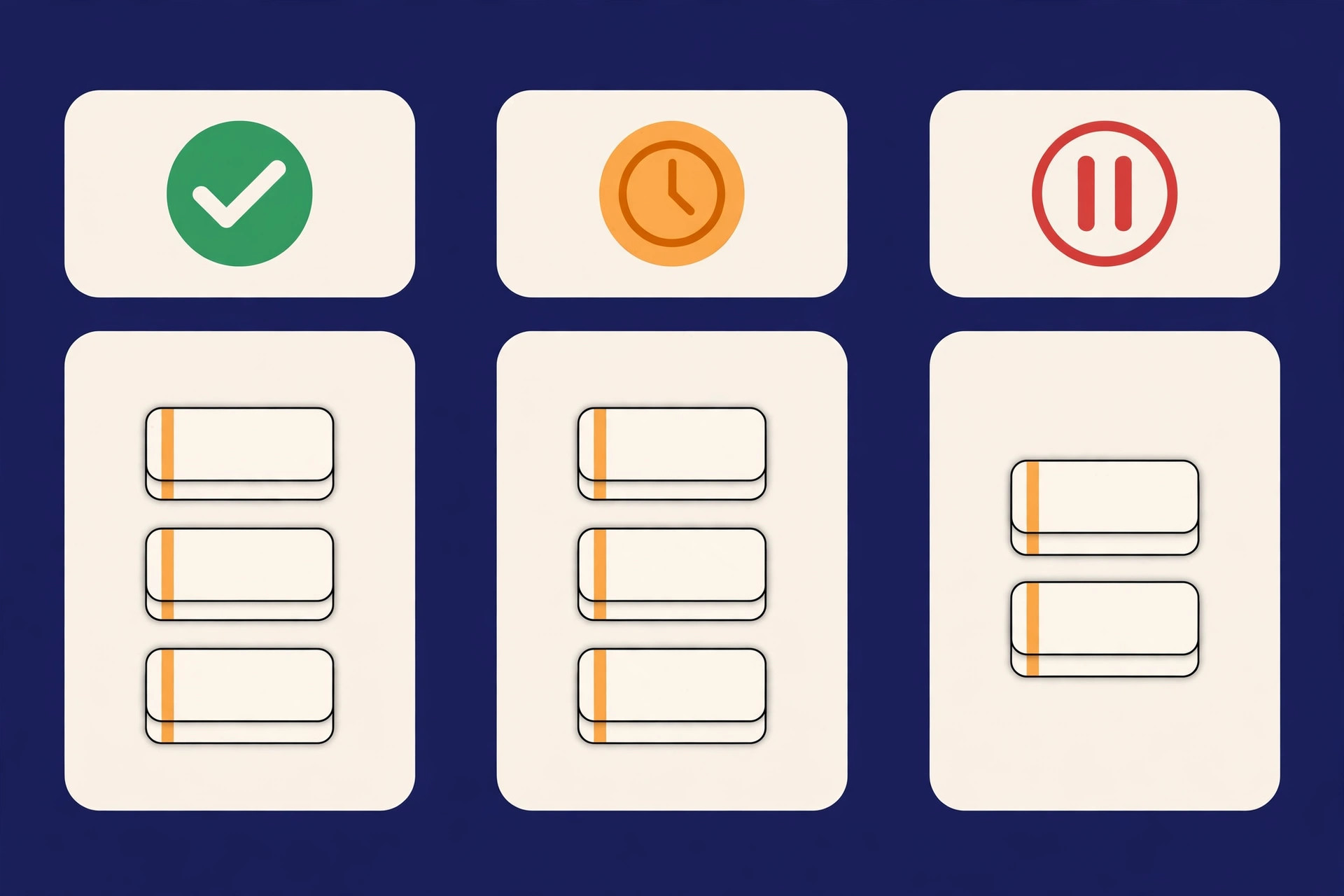
The Three Buckets: Absorb, Trade, or Price
Every request goes into exactly one bucket, the day it arrives. No fourth bucket, no "decide later" pile, because the later pile is where scope creep lives.
| Bucket | Rule | What the client hears |
|---|---|---|
| Absorb | Under 30 minutes, once, and it does not repeat | "Done, no charge, this one is on us." Named, once, in writing. |
| Trade | It replaces something of equal size | "Yes, if we pause X for this month to make room for it." |
| Price | Over 30 minutes, recurring, or it changes the deliverable | "Yes, here is the price and the date. Want me to go ahead?" |
The absorb bucket is the one people get wrong, in both directions. Absorbing everything is how the margin dies. Absorbing nothing is how a client learns you charge for every breath. The rules keep it honest: under 30 minutes, once, and it does not repeat. A request that arrives a second time is not a favor anymore, it is a pattern, and patterns get priced or traded.
The trade bucket is the most underused. A client who wants a new landing page and is willing to pause the monthly audit to get it is a client making a real choice, and that choice protects the relationship, because the client chose the scope, instead of you quietly absorbing it. The trade also keeps the workload flat, which is the entire point.
The price bucket is the honest one. "Yes, here is the price" is not a rejection. It is a yes with the cost attached, and most clients prefer it to a silent yes followed by a slower, more resentful version of the work three weeks later.
The Reply: How to Say It in Writing
The reply goes out the same day, in writing, in the same thread as the request. Same day matters, because a request that sits unanswered for a week becomes assumed, and an assumed scope is almost impossible to re-price later. The reply has four parts, and it is short.
- Step 1, name the request back. One line, in the client's own words: "You asked for a second landing page for the spring offer, live by Friday." Naming it proves you understood it, and it creates a written record of what was asked.
- Step 2, name the bucket. "That is outside the current retainer, so it goes in the priced bucket." One sentence. No apology, no justification, no paragraph about your process. A boundary stated plainly is easier to accept than a boundary wrapped in three paragraphs of explanation.
- Step 3, give the options. One price with one date, or one trade with one thing paused. Two options at most. A client who gets five options gets a negotiation. A client who gets one price and one trade gets a decision.
- Step 4, ask for the go-ahead. "Want me to go ahead at that price, or should we hold it for next month?" The question matters, because it makes the scope a decision the client made, not a cost that appeared on an invoice later.
Draft the reply with AI from the scope sheet if you like, but rewrite the judgment in your own words before you send it, the same way the weekly report post says to rewrite the "what it means" section. A model can structure the price and the options. It cannot decide how this client hears a boundary, and it must never invent a price.
The Scope Sheet: One Row Per Request
The sheet is the whole system. Without it, every decision is made from memory, and memory always says yes.
| Column | What goes in it |
|---|---|
| Date | The day the request arrived |
| Request | One line, in the client's words |
| Asked by | Who asked, because the decision maker and the requester are often different people |
| Bucket | Absorb, trade, or price |
| Cost or trade | The price, or the thing paused |
| Decision | Yes, no, or held for next month, with the date the client answered |
| Hours | The actual time it took, filled in after delivery |
Review the sheet once a month, in the retainer review. Three numbers tell you the health of the account: how many requests arrived, how many were absorbed, and how many hours the absorbed ones actually cost. If absorbed hours are climbing month after month, the retainer needs repricing, and the sheet is the evidence that makes that conversation easy, because it is a list of facts, not a feeling.
What Breaks, and the Guardrail for Each
| Failure | Warning sign | Guardrail |
|---|---|---|
| Every request gets absorbed | The month's hours are 30 percent over the retainer, and the client thinks everything is included | The 30-minute, once-only rule, enforced by the sheet, not by memory |
| The reply goes out a week late | The client assumes the work is included, and the price lands as a surprise | Same-day reply, in writing, in the same thread as the request |
| The price is invented on the spot | Two similar requests get two different prices, and the client notices | Price from the rate card, or from the actual hours, never from a guess in the reply |
| The trade never gets used | The workload grows every month, and nothing is ever paused | Every priced request gets a trade offered alongside it, even if the client picks the price |
| Absorbed work is never named | The client has no idea how much free work they received | Every absorb is named in writing, once: "done, no charge, this one is on us" |
| The sheet stops updating | Requests arrive in chat and never reach the sheet | The sheet is the inbox rule: a request is not real until it has a row |
Rule: a request that is never measured is a request you already said yes to. Log it the day it arrives, sort it into one bucket, and answer in writing, with a price, a trade, or a named free yes.
Lessons at the End
- Creep is gradual, and gradual is invisible. Nobody approves a 30 percent increase. Everybody approves a twenty-minute favor, three times a month.
- Three buckets, no fourth. Absorb, trade, or price, decided the day the request arrives. The "decide later" pile is where scope creep lives.
- Absorb by rule, not by mood. Under 30 minutes, once, and it does not repeat. A request that arrives a second time is a pattern, and patterns get priced or traded.
- The trade is the most underused move. A client who chooses what to pause is a client who owns the scope, and the workload stays flat.
- Answer the same day, in writing. A request that sits unanswered becomes assumed, and an assumed scope is almost impossible to re-price later.
- The sheet is the evidence. Hours absorbed, requests priced, trades made. At repricing time, a list of facts beats a feeling, every time.
If you build only one thing from this post, build the scope sheet and the same-day reply: one row per request, one bucket per row, and an answer in writing before the day ends. The sheet takes about five minutes a week once it exists, as a planning figure. It does not stop clients from asking. It stops you from saying yes to work nobody ever priced.